The New Congregational Church in Kinsley, Kansas:
|
January, 16, 1886
The Kinsley Graphic: - Work will be commenced on the new Congregational Church building as soon as the weather will permit. March 13, 1886 The Kinsley Mercury - The building committee having in charge the construction of the new Congregational church, will be ready in a few days to break ground. The plans are not yet fully arranged, but from what we have seen, we can say that it will be a handsome edifice and will be adapted not only for church services, but also for Sunday School and to be used on every day in the week. May 1, 1886 The Kinsley Mercury: - Ground has been broken for the new Congregational church building at the corner of Niles Avenue and Seventh Street. It is to be a frame building, with all the modern improve- ments, and will cost in the neighbor- hood of seven thousand dollars. Bow- man & Miller are the superintendents. June 12, 1886 The Kinsley Mercury: - The frame is up for the new Congre- gational church and the building will now rapidly press forward to com- pletion, and when it is finished, it will be one of the largest and most conveniently arranged and most tastily furnished church edifices in the west- ern part of the state. It is to be modern in every detail, furnished with elegant seats and heated with steam. June 18, 1886 The Kinsley Graphic: - The cornerstone of the new Con- gregational church was laid informally a few days ago. The following arti- cles were deposited in the rocky founda- tion: Copies of the local, state and church papers, various advertising matter of our city, a copy of Masonic minutes, coins and numerous other souvenirs. The GRAPHIC may not be running one hundred years from now when the stone is opened, but we are glad to think, that the copy of this paper taken out will indicate that Kinsley, in the year of our Lord 1886, was a bustling little burg, and inter- ested in every thing good and opposed to every thing bad. July 3, 1886 The Kinsley Mercury: - The window glass to be used in the new Congregational church will be stained glass and will cost $1,000.00. July 31, 1886 The Kinsley Mercury: - The new Congregational church is rapidly approaching completion. August 7, 1886 The Kinsley Mercury: - The spire of the new Congregationa- al church is looming heavenward. August 20, 1886 The Kinsley Graphic: - The seats of the new Congregational church have arrived. September 4, 1886 The Kinsley Mercury: - The spire of the new Congrega- tional church sports a handsome gilded vane and looks very neat since it has been painted and the surrounding scaf- folding torn away. September 10, 1886 The Kinsley Graphic: - A new organ has been placed in the Congregational church of Emporia at a cost of $2, 600.00. September 11, 1886 The Kinsley Mercury: - Last Sunday was the last service in the old church building... ...services to be held on Sunday in the new building. Dedication to be on 26th of Sept. - Last Sabbath morning the old Congregational church was packed with people to take part in the closing service in the old building. The sermon by the pastor was on the text: "It is finished," and was an effort to draw the minds of his audience to the sacredness of last things. It was said that the Gospel of Jesus Christ was a finished gospel, complete in every respect. It was demonstrated that as God finishes every thing he begins, so he will make a complete work of every Christian's life. If we can't finish our characters here, the argument is very strong that there will be another life in which to perfect the grand work. It was also shown that the last thoughts of Christ were directed to his disciples, his great work, and his spiritual chil- dren: so when we throw off the outer body of our church, we should think about the salvation of the community, and the interests of our homes. A deep impression was made on the large audience, and it is hoped that with their new church building, soon to be dedicated, and which is so complete in every part, the Congregational branch of the church of Kinsley, may reach a large prosperity, and may be instru- mental in directing many to heaven. - Services of the Congregational church next Sabbath morning in the lecture room of the new building. Sabbath school will convene there im- mediately after the regular church service. This room will comfortably seat a large number and it is hoped that arrangement will be agreeable to every one. The dedicatory exercises will take place September 26th. September 17, 1886 The Kinsley Graphic: - The Congregational church will be dedicated one week from next Sun- day. Preaching was held on last Sun- day morning and evening in the east room of it, which was finished last week. October 8, 1886 The Kinsley Graphic: Dedicated. - The new Congregational church re- cently finished at this place was, with appropriate ceremonies, was dedicated last Sunday. In the morning at 10 o'clock, services began in the chapel conducted by Rev. Addison Blanchard, of Topeka, which continued until 10:45 which was followed by the regular ded- icatory services, which consisted of singing by an excellent selected choir, responsive service led by the pastor and an address by Rev. Blanchard. During the morning service, the mem- bers and the public were called upon to as- sist liquidating the debt that remained upon the building, and the generosity of the people were displayed in con- tributing $2,200, the amount necessary to clear all obligations. In the after- noon, a children's service was held at which time they were addressed with pleasing words and instructive para- graphs by Revs. Platt, Cordley, Blanch- ard, Buser and the superintendent, Nathan Roberts. The evening hour floated over with the usual service preceding the sermon, after which Rev. Blanchard held at length a large untiring audience with his usual ex- cellent talk upon friendship in and be- tween congregations. This organiza- tion can congratulate themselves upon having one of the finest church build- ings in south-western Kansas, costing when completed $8,000. It is heated by steam, and lit with gas, which sparkles with beauty from twenty-four burners upon the walls while from the center of the ceiling, several small ones which compose a chandelier beam as a star of the first magnitude. On the west wing, at the rear of the pulpit, will be found during service hours the choiristeer and choir. The floor of this portion of the room being about three feet higher than the audi- ence room, thus giving prominence to them and adding a cheerful appear- ance to the surroundings. At the east is the chapel, where prayer meetings, Sunday School and attribute gather- ings to the Church at large will be held. Taking it as it is, we can not say otherwise than that this acquisi- tion to Kinsley is one that not only the members of this denomination, but the public at large, should feel proud of, and looked to as the work of untiring and Godly people and which stands as a monument of their valor work and due appreciation of public as well as private improvements. 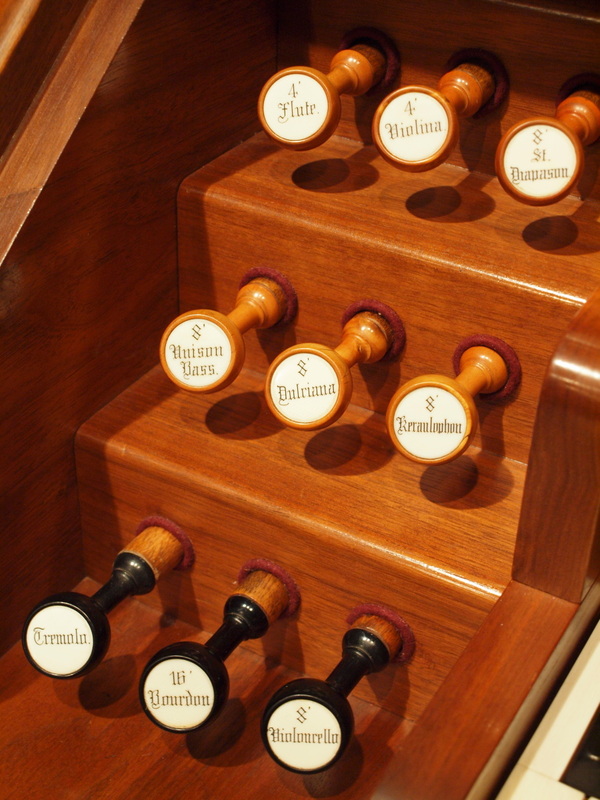
|
The New Congregational Church.
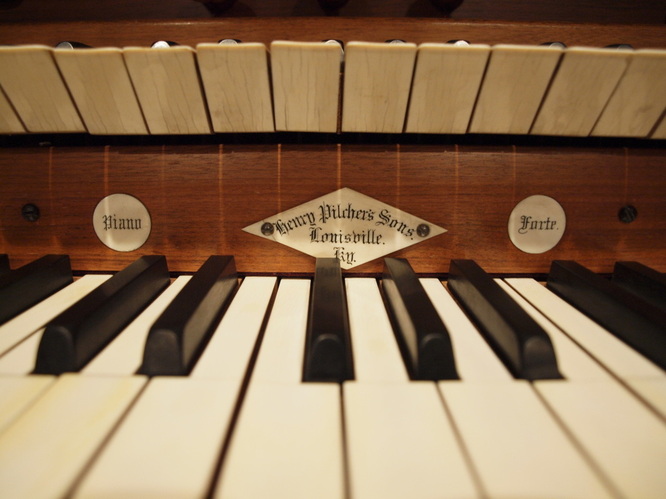
- Next Sabbath is to be a feast day, spiritually, at the Congregational church, the dedicatory services being set for that time. Dr. Richard Cord- ley of Lawrence, the pioneer of Con- gregationalism in the State of Kansas, will preach the sermon, and other emi- nent ministers will grace the occasion by their presence and addresses. The program arranged for Sabbath is a very rich one, and will afford inspira- tion and instruction for all classes of our population. All the churches of our city have united in the appropriate celebration of this event, and no doubt the spirit of Christ's teaching will be present-- "That they may be One that the world may know that God sent him." It is very proper indeed, that a paper like the MERCURY, that has always aimed to encourage every institution that builds up the community, should devote a large space to the history and description of such an enterprise as these people have carried to so grand and successful a consummation. We deeply realize the sublime mis- sion churches are accomplishing in our civilization. We know that they have stood in the forefront of our progress, and apart from being a restraint from evil, they have always been a stimulus to good. Looking back over the history of this particular church, we find one house built for the widow, under their benevolent supervision, and several destitute families, whose wardrobes have been renewed by their busy nee- dles, and whose empty larders have been refilled by their generous gifts. We have no hesitation in saying that when a church exists to do good in the community, and scatters its blessings far and wide, asking no question as to creed, nationality, or color, and aims to make itself more than a mere store- house of forms and dogmas, its work will be appreciated by the public, and they will be generously sustained in all their laudable undertakings If all churches were governed by such motives, Bob Ingersoll and his coadjutors would never have had a calling. It may be proper to state also in this connection, that it would be as impossible to build up a town without the work these churches are doing as it would be without railroads. Railroad officials have always offer- ed large bonuses to encourage the or- ganization of churches in the new towns they lay out. We mention these facts to show how indispensable these churches are to the welfare and pros- perity of our city, and while we are talking about booming our town, let us not fail to hold our churches well to the front. The first Congregational church of Kinsley, was organized in the year 18- 74. By the effort of Capt. P. H. Niles and his estimable wife, Rev. S. D. Storrs of Topeka, resident secretary of the American Home Missionary Socie- ty, was induced to come here and hold the first religious meeting, and preach the first sermon in Edwards County. These services were held in the office of the old Kinsley Hotel, which was in course of erection, and hence the first religious meeting in Edwards County had no roof over it. The skies above and rough boards around, and hard seats to sit on, and no aids to worship at all except loyal hearts and willing minds, such were the conditions out of which the present Congregational church grew. Shortly after the first meeting, an or- ganization was effected with six men- bers, and Rev. Mr. Gatlin was sent here as pastor. The Humphrey family who had come a little while before from down east, Edwin Bartlett, our present enterprising harness make, Judge Marsena Moar and the Niles family, constituted the muscle of the church and society. The second pastor of the church was Rev. Henry Hoddle, now of Garfield, Kansas. It was during his pastorate the first church was built north of the track, on the land now occupied by Mr. Flanigan. This church cost about $2,000, and was nearly all collected in Boston through the labors of Mrs. P. H. Niles assisted by Mr. Edward Kins- ley. Mr. Hoddle performed his work under great difficulties, and by his he- roic zeal nursed the church through the hard times and the drought, placing it on a strong foundation and thus con- tributing largely to its present success and usefulness. It was under his pas- torate that the Sabbath school receiv- ed a superintendent, whose enthusi- asm has made it the leading school in south western Kansas. When the first church was about ready for dedication, a cyclone came along and unroofed it, delaying the service several months. In the month of June eight years ago, it was put in shape again and set apart for the worship of God, with appropriate ceremo- nies, Rev. S. D. Storrs of Topeka, preaching the sermon. The next pastor was Rev. Samuel Woods, under whose ministry the meeting house was moved from the outskirts of the city to the lot on which it at present rests. Mr. Woods was a faithful pastor and labored hard to strengthen the church in its new quarters. In the spring of 1882 what is know now as the old, then the new, Con- gregational church was dedicated to the service of God, Rev. Peter McVic- ars of Washburn College, preaching the sermon. In the fall of 1883 the present pastor, Rev. S. E. Buser, was called to the pastorate. At that time the membership was nineteen. To- day its membership is fifty-five. The church building became too small for the audiences. It was an imperative necessity to furnish more room for both Sabbath school and regular ser- vises. The building to be dedicated next Sabbath is therefore the out- growth of the actual needs of the church. The old church was sold to a capital- ist from Pittsburg some fifteen months ago, and the cornerstone of the pres- ent edifice was laid last June. Miller and Bowman were employed to super- intend the work, and draw the plans and specifications for the same. To say that they have succeeded in build- ing the finest church west of Topeka will be admitted by anyone paying a visit to the new building. The di- mensions of the auditorium are 36x 45. The Sabbath school apartment is 24x34. On the rear are two rooms 10x 10, one for the pastor's study, the other for a class or music room. The entire seating capacity of the church will be in the neighborhood of four hundred. The building is lighted by gas, furnish- ed by the Combination Gas Machine Company of Detroit, Mich. The Home Comfort Steel Furnace, made at St. Louis Mo., will be used in heating the house. A pipe organ from the factory of Henry Pilcher's Sons, of Louisville, Kentucky, has been or- dered and will be placed in position about November first. The outside painting was done by Lester & Co., the inside decoration Renstrom & Olson, all of them home talent. All the finishing, carv- ing, frescoing and painting was done by home talent. It was the aim of the building committee to spend the money in our own town. Especial mention is to be made of the ladies who have been enterprising, enthusiastic and zealous in their sup- port of the institution. Much credit is due to Mr. and Mrs. R. E. Edwards for their handsome contributions and liberal support. A newspaper report is necessarily very fragmentary and imperfect. On behalf of this church we should in- vite our citizens to attend the dedica- tion next Sabbath and see for them- selves. We feel sure that everyone will feel a just pride in this church, and will wish pastor and people God speed in so good and noble a work. 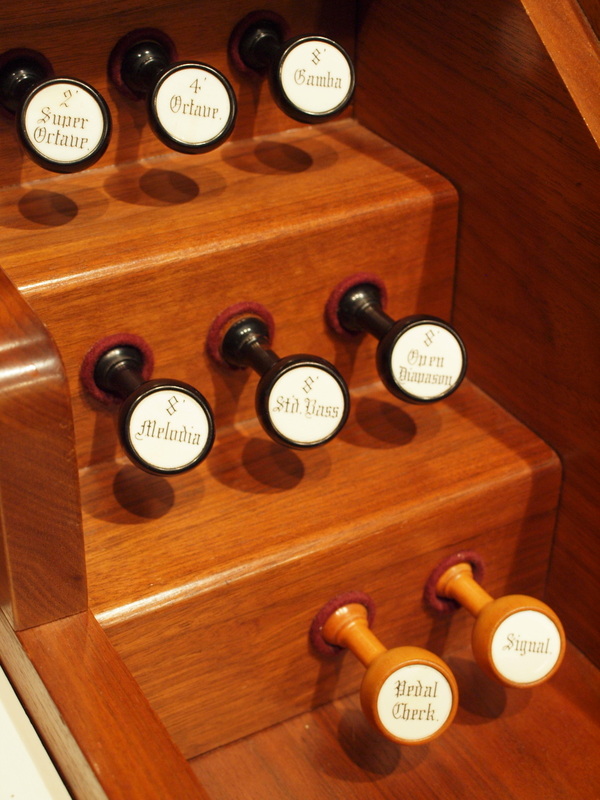
|
The New Henry Pilcher's Sons Organ:
|
October 8, 1886
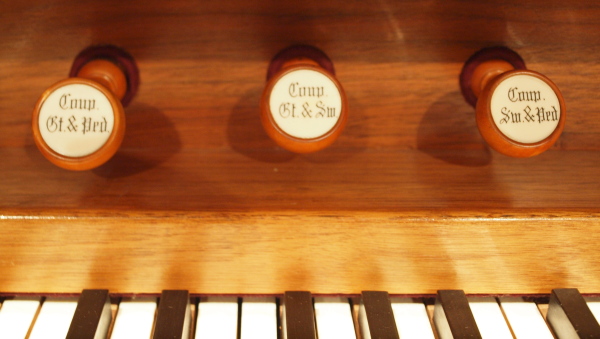
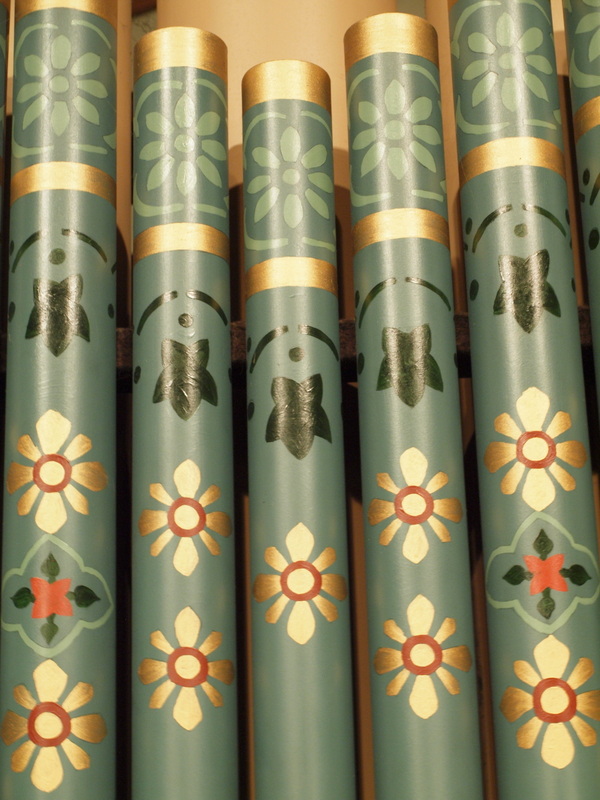
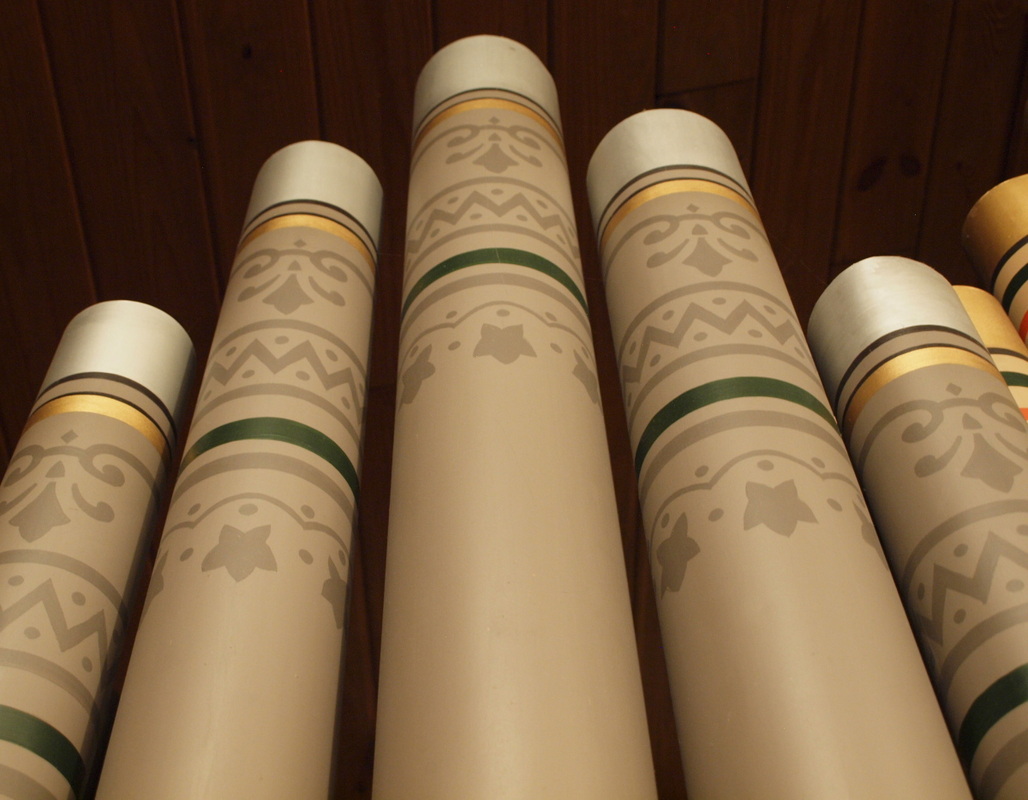
The Kinsley Graphic: - Willis Pech has been secured as organist in the Congregational Church. October 22, 1886 The Kinsley Graphic: - The Congregational church people have done exceedingly well in accom- plishing the building of their fine church, and as a finale, propose putting in a pipe organ costing a large amount, a portion of this they intend raising by means of securing entertainments that choose to be given in Kinsley, but they propose using precaution towards securing only such that are know to be in every way first-class, and what- ever may be given for this benefit can be relied upon by the public as such. December 4, 1886 The Kinsley Mercury: Grand Concert. - An organ recital and concert will be given at the First Congregational church as soon as the organ can be put in place. The managers desire to sell at least fifty tickets at $5.00 per couple to all those who wish to assist to that extent in paying for the organ. Anyone who will kindly purchase as above named will do the management a great favor and can find tickets with Messrs. Lester Noble and Nathan Roberts. The re- mainder of the main auditorium will be reserved for sale at seventy-five cents for sitting; the chapel at fifty cents for sitting. The chart of reserved seats will be on sale at usual place as soon as date can be fixed. December 4, 1886 The Kinsley Mercury: - The large and magnificent pipe organ for the new Congregational church arrived Friday. It will be placed in the church next week when we will give a description of it. December 10, 1886 The Kinsley Graphic: - The new pipe organ for the Con- gregational church has arrived and is being put in its proper position. December 10, 1886 The Kinsley Graphic: - We call especial attention to the organ recital next week at the Congre- gational church. Prof. Peck has work- ed hard to produce before this commu- nity a concert which will compare favorably with any given in the east- ern cities. The new pipe organ has been placed in position this week by Henry Pilcher's Sons of Louisville, Ky. is a magnificent addition to the other agencies of culture and civilization already introduced into western Kan- sas. We claim it is the duty of every good citizen to sustain an effort like this. We are glad to tell our eastern friends that we have as many facilities for refined enjoyment in Kinsley as they have in classic New England. If we wish to increase the value of real estate, and boom our city, we must show the visitors to this country that we have all the advantages that can be found in any land under the sun. Next Wednesday evening, we will be af- forded an opportunity for everyone to show the appreciation of an enter- prise, from the enjoyment of which none of our citizens is debarred. Tick- ets have been placed on sale at Bur- bank's, the price of which is within the reach of every pocketbook. Let no one fail to attend the organ recital. December 11, 1886 The Kinsley Mercury: The New Pipe Organ. - This paper has always been at the front in the encouragement of enter- prise and progress. We endorsed most heartily the construction of the Con- gregational church and have held that it would do considerable towards giv- ing our city prominence in the state. Every visitor to this church expresses surprise and concludes at once that Kinsley must be a good place to bring a family. The idea of a pipe organ when first proposed seemed like cheek. But now since it has been consumma- ted, everyone is proud of it, and the people are generally chipping in to pay the bill. We go on the principle that Kinsley people always appreciate a good thing, and we have no doubt they will show their appreciation of this effort. The organ recital next week is for the purpose of raising funds to help pay for the instrument. December 11, 1886 The Kinsley Mercury: The Great Pipe Organ - The new organ which is being erected in the Congregational church occupies a space on the floor of 10 1/2 feet wide by 7 feet deep and stand nearly twenty feet high. The casework enclosing the me- chanical parts is of light wood to match the interior of the building-- the frames and moldings being of ash and the diagonal paneling of oak, all finely polished in hard oil. Surmounting the woodwork of the front are three groups of speaking pipes handsomely decorated in bright colors, relieved with gold and silver leaf; while in the rear of these is seen a group of still larger pipes, rising to a point in the center and similarly or- namented. The mechanism of the instrument is a marvel of ingenuity and somewhat difficult to describe. The wind is sup- plied by a bellows measuring seven feet long and five feet wide with doub- le feeders worked by a lever at the back. The wind is then conveyed to the four wind chests which contain the valves, of which there is one for each key and pedal. As the keys are pressed down thus opening the valves, the compressed air is admitted to as many pipes as there are stops drawn. There are two sets of keys and twenty-seven pedals, besides the com- position movements for rapid changes of stops, and a balanced swell pedal, all brought under the control of one performer. Of stops or registers there are twen- ty, operated on by oblique faced knobs on either side and over the key- boards. The number of pipes is between six and seven hundred [628], varying in speak- ing length from sixteen feet to half an inch and in diameter from ten inches to the size of a goose quill. Some of the pipes are made of wood others of zinc, but the greater num- ber are of a beautiful composition called spotted metal. They also vary in shape to produce differences of tone. Nearly one half of the pipes are en- closed in a swell box, the front of which is composed of vertical shades that are opened or closed by a move- ment of the foot of the player, thus producing the crescendo and diminu- endo effects. The full power of the organ is equal to an orchestra and with as great a variety of tone; some of the stops be- ing named from and imitating orches- tral instruments. Then again the softer stops are so delicately voiced and can be so subdued at the will of the performer as scarcely to be heard. December 11, 1886 The Kinsley Mercury: Program of Concert. - Following is the program for the organ recital and concert at the Con- gregational church Wednesday even- ing, December 15th 1886: PART I. Organ Solo--”Wedding March,” from Mid- summer Night’s Dream”. . . . . . . . .Mendelssohn. W. J. Peck Octette--”Quoniam Tu Solus,” from 12th Mass . . . . . . . . . . . . . . . . . . . . . . . . . . . . . . . . . Mozart. Mrs. A. R. Bowman, Miss Jennie Stapleton, Mrs. Wm. F. Blanchard, Miss Annie Stapleton, W. S. Simpson, Chas. Van, Frank Woodbury, and Fred Boles. Duet--”Master and Pupil”. . . . . . . . . . . . Hewitt. Mrs. S. W. Vandivert and C. H. Seamans. Instrumental Trio--”Caliph De Bagdad.” . . . . . . . . . . . . . . . . . . . . . . . . . . . . . . . .Boieldien. A. W. Hine, Violin; W. J. Peck, Piano; C. H. Seamans, Cornet. Soprano Solo--”Bird From O’er the Sea” . . . . . . . . . . . . . . . . . . . . . . . . . . . . . . . . . . .White. Mrs. Bowman. Organ--Familiar Airs Henry Pilcher. Male Quartette--”Remember Now Thy Crea- tor.”. . . . . . . . . . . . . . . . . . . . . . . . . . . . . Rhodes. Messrs. Lauber, Peck, Woodbury and Sea- mans. PART II. Ladies’ Quartette--”Greeting to Spring.” . . . . . . . . . . . . . . . . . . . . . . . . . . . . . . . . . . .Straus. Misses Jennie and Annie Stapleton, Mes- dames Vandivert and Bowman. Baritone Solo--”The Deep Blue Sea.” . . . .Smart. Mr. Woodbury. Organ Solo--Offertoire. . . . . . . . . . . . . . . .Batiste. W. J. Peck. Soprano Solo--”Woodnymph’s Call.” . . . . . . . . . . . . . . . . . . . . . . . . . . . . . . . . . .Williams. Miss Jennie Stapleton. Male Octette--”Arion Waltz.”. . . . . . . . . . . Vogel. Messrs. Lauber, Van, Simpson, Peck, Wood- bury, Boles and Seamans. Quartette--”O.P.R.A.” . . . . . . . . . . . . . . . . .Leslie. Mrs. Vandivert and Miss Stapleton: Messrs. C. H. Seamans and W. J. Peck. December 11, 1886 The Kinsley Mercury: - Henry Pilcher, of the firm of Henry Pilcher’s Sons, Louisville, Ky., arrived in the city last Saturday, to place in position the new organ in the Congre- gational church. We have found Mr. Pilcher a very genial and pleasant gentleman, and extend to him a hearty welcome to our little city on the plains. - Great interest has been manifested in the setting up of the new organ at the Congregational church. Many person have visited the church during the week, and were overwhelmed with sur- prise at the inner mechanism of a pipe organ. It is truly a wonderful work. No wonder there is a rush for desirable seats for the organ recital next week. |
December 11, 1886
The Kinsley Mercury: Auction Sociable. - A novelty in the way of evening par- ties is to be given by Mrs. Jennie Griffith on Christmas evening. Her beautiful home will be thrown open to all persons who wish to get acquainted with one another and at the same time enjoy many rare and racy attractions. Prof. Peck has consented to render sev- eral fine selections. Everyone is re- quested to bring some article, which they can afford to donate to the cause. These articles wrapped in attractive packages, will be sold to the highest bidder. The funds raised will be de- voted to assist in paying for the new pipe organ in the Congregational church. A special invitation is given by Mrs. Griffith to all strangers in our midst to break the ice towards ac- quaintanceship. A reception commit- tee will be present who will take pains to introduce strangers. December 11, 1886 The Kinsley Mercury: - The organ recital at the Congrega- tional church next Wednesday evening will give lovers of good music such a treat as they have never enjoyed be- for in this city. - The programs for the concert were printed at the MERCURY office. - Remember the concert at the new Congregational church next Wednes- day evening. December 17, 1886 The Kinsley Graphic: - St. Johns church is the first church in Wichita to order a pipe organ. - The organ Recital at the Congre- gational church on Wednesday evening was in every way a grand success. Each and every part was so well ren- dered that comment upon the same seems almost useless, and the program so extended that to speak of the par- ticipants individually, would only be at length. December 18, 1886 The Kinsley Mercury: The Organ Concert. - The entertainment given at the Congrega- tional church Wednesday evening, on the oc- casion of the opening of the new organ, was an event that will long be remembered with pleasure by all who were present. Artistically and financially it was a complete success and reflects great credit on those who had the mat- ter in charge. That our city should possess so fine a church building, is the theme of frequent remark, and now that Kinsley can claim the first pipe organ west of Emporia will cause greater wonder. The instrument is from the well known firm of Henry Pilcher’s Sons, Louisville, Ky., and well sustains the reputations of its builders. The program for the concert was arranged by the organist and chorister, Mr. Willis J. Peck, a gentleman of acknowledged experience and ability, and who enlisted as his assistants some of the best vocal and instrumental talent of our city. Mr. Peck seemed in his element as he took his seat at the organ, giving as the opening number the popular wedding march from Mendelssohn’s “Midsummer Night’s Dream,” and in which he brought forth the power and beauties of the organ with due effect. Following this was a chorus from Mozart’s Twelfth Mass by the choir of the church --a double quartette consisting of Mesdames Bow- man and Blanchard, Misses Jennie and Annie Stapleton and Messrs. Simpson, Van, Wood- bury and Bodes, with Mr. Peck at the organ. This classical composition was rendered in a manner which gave evidence of careful drill- ing and patient practice. Then came a beautiful quartette for male voices, “Sunrise,” which was sung with taste and expression by Messrs. Lauber, Peck, Woodbury and Seamans. The overture to “Caliph de Bagdad,” a trio for violin, cornet and piano, was played in excellent style by A. W. Hine, C. H. Seamans and W. J. Peck, and was a very enjoyable num- ber. In the solo, “Bird From O’er The Sea,” Mrs. A. R. Bowman exhibited a soprano voice of good compass, sympathetic in quality and well under control. Mrs. B. with a little attention to style and further practice will make an at- tractive singer. In addition to well merited applause, this lady was accorded the first trib- ute of flowers. The “Familiar Airs,” by Mr. Henry Pilcher on the organ, were given in an off-hand man- ner which displayed familiarity with his instru- ment rather than great skill in execution. The selections however, were well chosen, some of them being introduced by request and all were of a character to please the popular taste. This was followed by an amusing dramatic scene, or musical illustration of a manager’s trials. The manager is seated on the platform receiving applicants for engagement by various artists, one after another, who each in turn exhibited their attainments, and being commended or censured, receive the manager’s criticisms with varying tempers and which terminate in harmonious confusion. These parts were taken by Mr. Seamans as manager, Miss Stapleton as a prima donna, Mrs. Vandi- vert as an Irish songstress and Mr. Peck as a veritable Dutchman. All acquitted themselves easily and naturally to the great amusement of the audience, who gave the piece a hearty encore. This concluded first part. The opening number of the second part was a humorous duet, “Master and Pupil,” by Mrs. S. W. Vandivert and Mr. C. H. Seamans, both of whom possess rare dramatic talent. Mrs. Vandivert’s voice showed to good advantage and gave evidence of considerable cultivation. The baritone solo by Frank Woodbury was well executed and his voice blended delight- fully with the tones of the organ. A slight nervousness was noticeable but did not distract from the merits of the piece. Instead of the organ solo by Mr. Peck, that gentleman invited Mr. Pilcher to supply his number by some operatic selections and im- provisation on the organ. Miss Jennie Stapleton’s song, ”Wood- nymph’s Call,” a gem itself, was charmingly rendered. The young lady’s voice is fresh as a dewdrop, clear as a flute, and gives promise of fine development. She was greeted with hearty applause and secured the second floral offering from admiring friends. The “Arian Waltz,” a septette by Messrs. Lauber, Van, Simpson, Peck, Woodbury, Boles and Seamans, was one of the best efforts of the evening. The gentlemens’ voices, from the high tenor of Mr. Lauber to the basso pro- fundo of Mr. Seamans, harmonizing like a well tuned instrument and in strict time. In response to an emphatic encore, they then gave “The Knight’s Farewell,” which if anything was even better executed and more pleasing than the last. Such correct rendering of vocal music without instrumental accompaniment, would be creditable to professionals and is be- yond praise in our home musicland. By special request Mr. Pilcher again took his seat at the organ and played “Home Sweet Home,” as fitting prelude to the closing num- ber, “Remember Now Thy Creator,” by Rhodes. This is a pleasing composition in recitative or chanting style and was admirably sung by Messrs. Lauber, Peck, Woodbury and Sea- mans. The entire program from first to last was greatly enjoyed and the performers are to be congratulated on the success of the entertain- ment. As the primary object of the concert was the inauguration of the new organ, it seems but proper that description of the instrument should be given. As before stated, it is from the Louisville Organ Factory, which of itself is a guarantee of excellence, the firm having been in existence, from father to son, for upwards of fifty years, and their work favorably know throughout the country. The Scheme of the organ, submitted by the builders and approved by the organist, is one which within the limits could hardly be improved. In volume it is full and rich, and in tone has an unusual variety, from the powerful Diapason to the delicious softness of the Dulciana. The Melodia of the Great and Flute of the Swell are exceptionally fine. On the Pedal it has besides the deep Bourdon, a Violoncello of fine quality. Mechanically too, the instru- ment is all that could be desired. Externally the organ presents a beautiful appearance, the caseing being of oak and ash finely polished and the woodwork surmounted by thirty-seven speaking pipes in double row, handsomely illuminated in rich coloring, relived with gold and silver leaf. The front stands eleven feet wide by twenty feet high. The entire cost of the organ is about eighteen hundred dollars which is regarded a low figure considering the excellence of the work. TRANSIENT MUSICIAN. January 1, 1887 The Kinsley Mercury: - The auction social at the elegant residence of Mrs. J. M. Griffith on Christmas night was well attended and thoroughly enjoyed. The novelty of this affair was a refreshing feature, and much merriment was produced by the opening of packages which looked from the outside as if they might be the receptacle of treasures, and which when opened, disclosed to the aston- ished gaze of the purchaser some arti- cle which he never dreamed of pur- chasing. The party did not break up until well on toward midnight. The proceeds of the sale, about thirty dollars--go to the organ fund of the Congregational church. January 8, 1886 The Kinsley Mercury: - The annual meeting of the Con- gregational church and society, was held last Monday evening. It was re- ported that the entire salary of the pastor had been provided for. Rev. S. E. Buser was unanimously re-elect- ed to fill the pulpit for the ensuing year. The meeting was largely attend- ed by representative citizens, and con- siderable enthusiasm was manifested. The people of this community will be glad to know that the service of Rev. S. E. Buser has been secured by the Congregational church society for the ensuing year. Under the charge of Rev. Buser the society has grown and flourished; they have built the finest church edifice in this section of the state, and have placed in it a magnifi- cent pipe organ a work that could only have been accomplished through the energetic efforts of such a pastor as Rev. Buser. |
The Cawker City United Methodist Church:
|
March 26, 1931
Cawker City Ledger MAY PURCHASE PIPE ORGAN Methodist Congregation is Contemplat- ing Buying Instrument. - It is possible that Cawker City may have a pipe organ within the near fu- ture, provided that plans now being made by members of the Methodist church are carried out. The instrument, if purchased, will be installed in the M. E. church at Cawker City. According to those in charge, the purchase price will be raised by sub- scriptions from church members and the outlook from the pledges already made is good. It is said that the subscription pledges range up to one hundred dol- lars and it is hoped to complete the drive within a few days. The propo- sition will be fully explained next Sun- day at the church in connection with "Member Day." April 16, 1931 Cawker City Ledger METHODIST MENTION - Don't forget, there are better things ahead. Last Sunday showed continued interest in the Sunday School and the church service as well. Interest is be- ing manifest in various ways with us. Come and see. Next Sunday afternoon and evening will be the S. S. Township Convention with us. You are invited to spend the day with us in consideration of meth- ods and general interests. Covered dish supper. It is hoped that the organ will be completed by that time so we may have the pleasure of it during the meeting, however, the week following will be a big day with us also in a Sunday School and Church day, at which time we will dedicate the organ and have many other points of interest to consider. Plan to be with us on that day. Have you got your name and contri- bution in on the organ yet? Many cannot give a lot, but all can give some and in years to come you will appreciated the effort you may make now in assisting in this lasting enter- prise. We have something to be proud of in our little city and we would like to count you in with us. What do you say? "For where a man's treasure is, there will his heart be also."--Jesus. Just think it over. April 23, 1931 Cawker City Ledger HEAR NEW ORGAN NEXT SUNDAY ---------- Dedication of New Equipment At Methodist Church Service. ---------- - Dedication of the new pipe organ recently installed in the Methodist Church will be a part of the service next Sunday, according to R. Arthur Spence, pastor of the church. Speakers from out of town will take part in the program and Miss Miriam Enyeart, daughter of Rev. W. W. En- yeart, of Glen Elder, will play the organ Sunday. The program is for a regular morn- ing service to be followed by a basket dinner. The dedication of the organ is scheduled to take place at 2:30 p.m. |
April 30, 1931
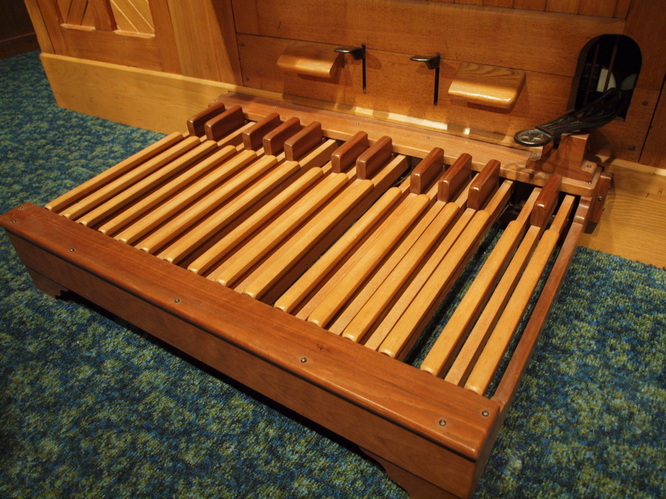
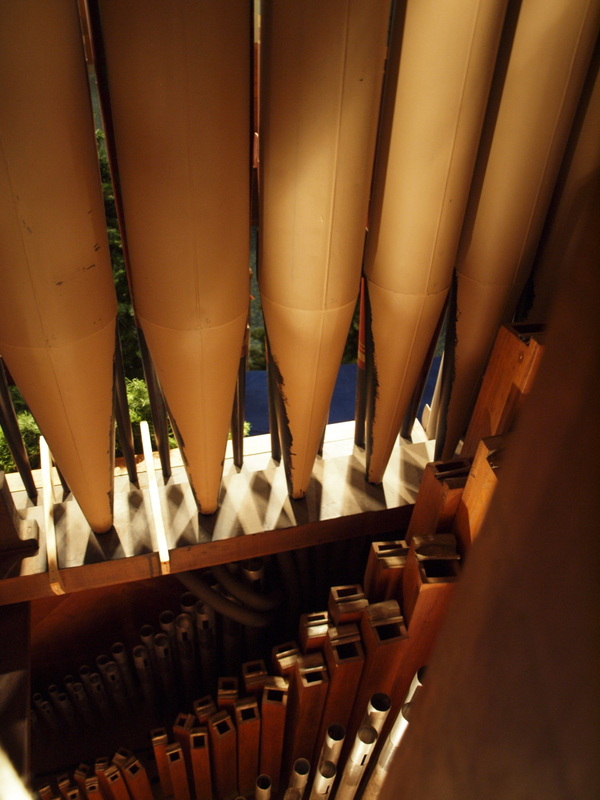
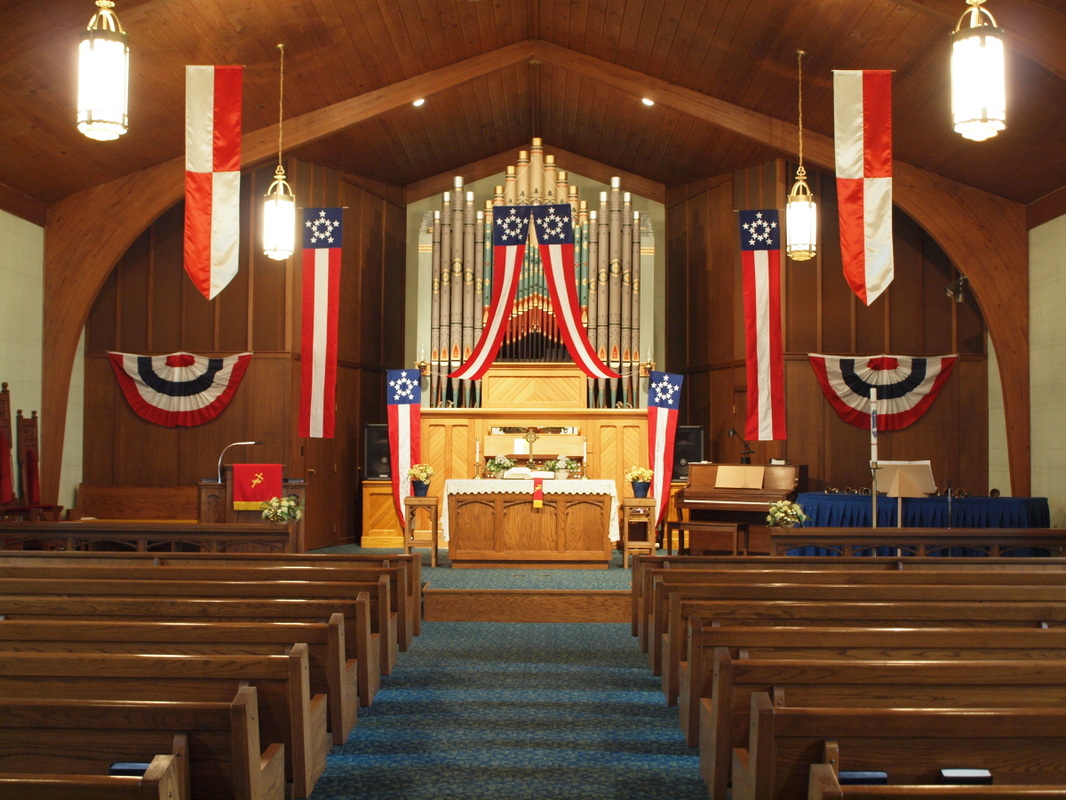
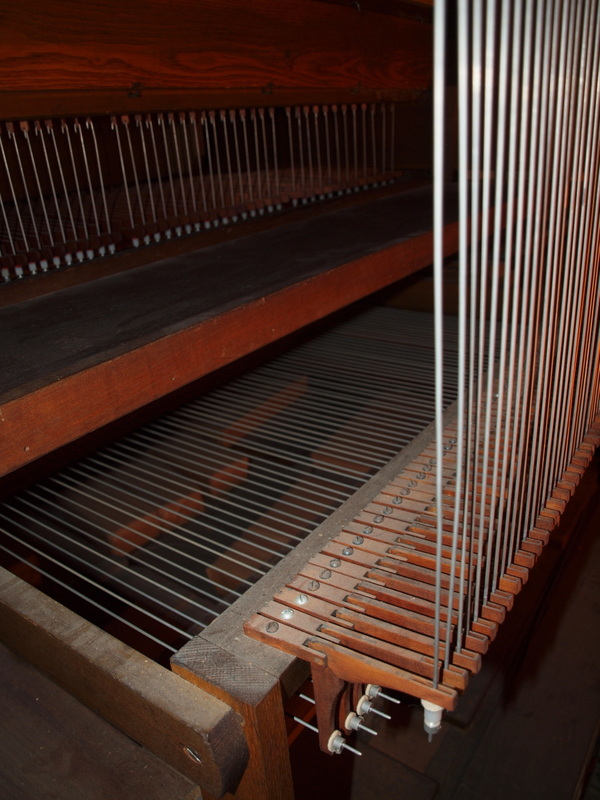
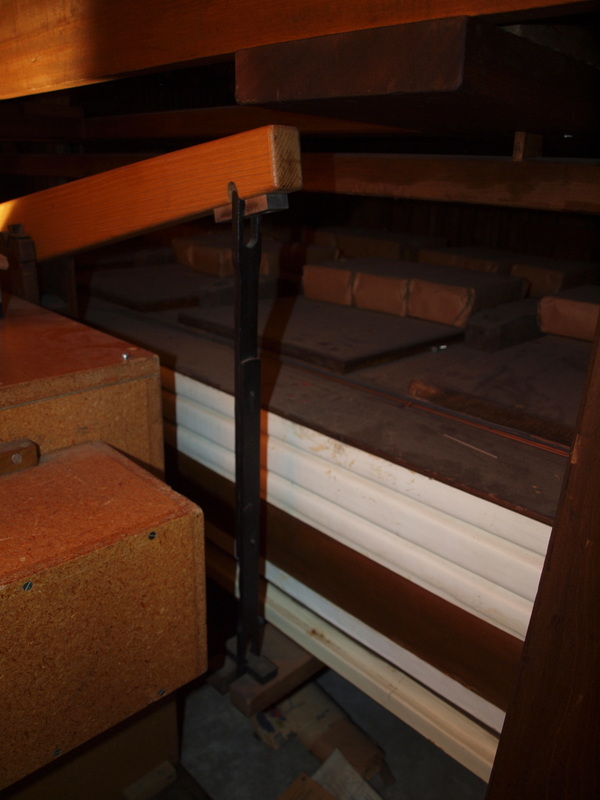
Cawker City Ledger Dedicated New Organ Sunday ---------- Program and Dedication at Methodist Episcopal Church. ---------- Large Crowd Attended Services Organ Was Brought Here From Kinsley And Is Said To Be A Fine Instrument --------- - Sunday, April 26th, the new pipe or- gan in the First M. E. church of this city was formally dedicated to the use of the church. The dedicatory address being delivered by the Rev. G. M. Boi- court, superintendent of the Salina District, to a congregation which over- flowed the main auditorium of the church and partially filled the balcony. This address and dedication were part of a program which took on the character of an all-day meeting lasting from the Sunday School hour of 9:45 a.m. until half past four in the after- noon. Regular morning services were held, the Rev. L. B. Tremain, of Lebanon, a former pastor of the Cawker City church, preaching the morning sermon. As previously arranged, members of the congregation brought their din- ners to the church, and under the supervision of members of the Ladies Aid Society, all the food was served cafeteria style, the entire church be- coming a dining room for the accom- modation of the large number who had availed themselves of the oppor- tunity to enjoy the fellowship of the occasion. At half past two, the dedication serv- ice proper began, the following pro- gram being carried out in detail: Organ Prelude and Processional; Special Number by M. E. Choir; Hymn; Invocation by Rev. L. B. Tremain; Duet by Mrs. Edgar Kyle and Mrs. Pete Fritchen; "The Place of Music in Worship"--Rev. W. W. Enyeart: "The Organ, Why and How"--Rev. R. A. Spence; Organ Music; Dedicatory ad- dress--Rev. Dr. G. M. Boicourt, Dis- trict Superintendent; Special Dedica- tions in Song; Benediction; Organ Re- cessional. Cawker City is to be congratulated upon the acquisition of this splendid organ. There are few towns of this size which have such a splendid mus- ical instrument and it is believed it will be a constant source of pleasure and comfort to the people of the com- munity. Epitomized, here is a brief story of the organ which was dedicated on Sun- day: the organ is electrically operat- ed; possesses almost 600 "pipes" rang- ing size from the monster wood and metal tone producers seen by the aud- ience down to the small ones not much larger than a tack hammer handle; It has three keyboards--two manual and one pedal--tones from either or all three being produced at will; It was brought here from Kinsley, Kans., where it had been taken out to give way for a still larger instrument; It took an expert two weeks to assemble its parts here; if purchased new, it would cost about $4,800; at the time of dedication the entire cost of organ and installation had been provided for ex- cept about $200, and probably by the time this is read, even that sum will have been paid or pledged. |
|
August 14, 1975
Cawker City Ledger Old Organ May Play Again - According to a report from the building committee of the United Methodist Church, the District Board of Church Location has approved the pre- liminary plans of the sanctuary and the financing and they felt that things were in good shape to start the building. One question that has been discussed is whether or not to keep the old organ and have it moved to the new building. Cost of repairing the organ and bringing it up to modern standards and quiet operation would be $11,450 with the estimate made by the Reuter Organ Co. of Lawrence. In con- trast however, a new electric action, 12 rank organ would cost up to $36,000. |
Added to the $11,450 would be
an additional $6,000 to $7,000 for raising the roof of the new building and adding 117 square feet to accommodate the old organ, according to a letter to friends and parishioners of the church. Four organ companies were contacted and they all strongly recommend the keeping of the old organ as with care and ser- vice would be an antique show- piece, being one of the oldest pipe organs in Kansas. The church building fund re- port shows a total of $41,532.99 in the account as of August 4, most of this being in Certificate of Deposit and Savings Account. The church congregation will vote August 17 on the question of keeping the old organ or buy- ing a new one. |
Click on image to enlarge:
Information Provided by
The Cawker City Hesperian Historical Society
All Rights Reserved.
The Cawker City Hesperian Historical Society
All Rights Reserved.
